 434aa8c69d
Phase1 后端核心:
- 新增 fsgx_v1.sql 迁移脚本(is_queue_goods/frozen_points/available_points/no_assess)
- SystemConfigServices 返佣设置扩展(周期人数/分档比例/范围/时机)
- StoreOrderCreateServices 周期循环佣金计算
- StoreOrderTakeServices 佣金发放后同步冻结积分
- StoreProductServices/StoreProduct 保存 is_queue_goods

Phase2 后端接口:
- GET /api/hjf/brokerage/progress 佣金周期进度
- GET /api/hjf/assets/overview 资产总览
- HjfPointsServices 每日 frozen_points 0.4‰ 释放定时任务
- PUT /adminapi/hjf/member/{uid}/no_assess 不考核接口
- GET /adminapi/hjf/points/release_log 积分日志接口

Phase3 前端清理:
- hjfCustom.js 路由精简(仅保留 points/log)
- hjfQueue.js/hjfMember.js API 清理/重定向至 CRMEB 原生接口
- pages.json 公排→推荐佣金/佣金记录/佣金规则

Phase4-5 前端改造:
- queue/status.vue 推荐佣金进度页整体重写
- 商品详情/订单确认/支付结果页文案与逻辑改造
- 个人中心/资产页/引导页/规则页文案改造
- HjfQueueProgress/HjfRefundNotice/HjfAssetCard 组件改造
- 推广中心嵌入佣金进度摘要
- hjfMockData.js 全量更新(公排字段→佣金字段)

Phase6 Admin 增强:
- 用户列表新增 frozen_points/available_points 列及不考核操作按钮
- hjfPoints.js USE_MOCK=false 对接真实积分日志接口

Phase7 配置文档:
- docs/fsgx-phase7-config-checklist.md 后台配置与全链路验收清单

Made-with: Cursor

An ID Generator for PHP based on Snowflake Algorithm (Twitter announced).


Description
Snowflake algorithm PHP implementation 中文文档.
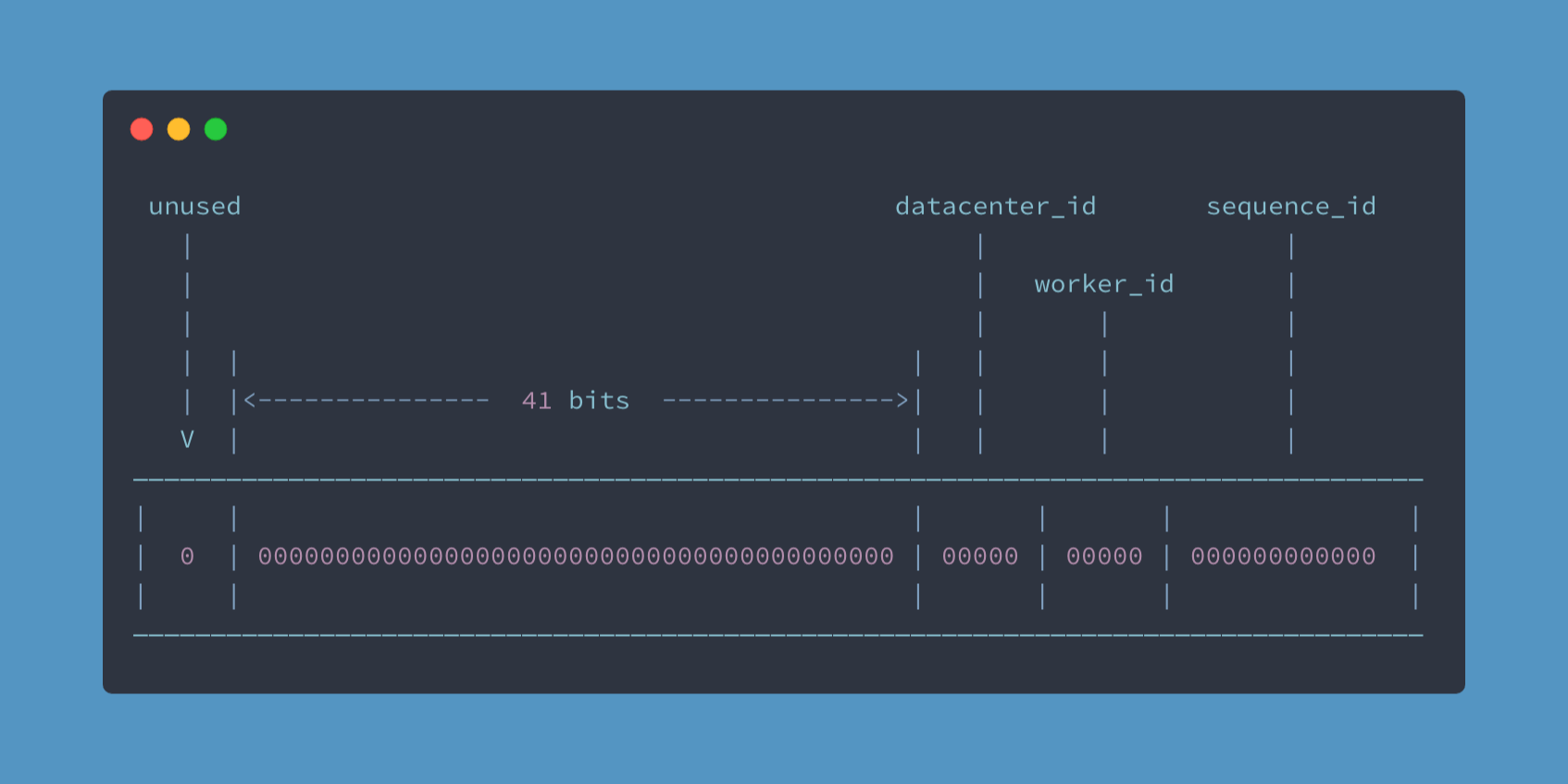
Snowflake is a network service for generating unique ID numbers at high scale with some simple guarantees.
- The first bit is unused sign bit.
- The second part consists of a 41-bit timestamp (milliseconds) whose value is the offset of the current time relative to a certain time.
- The 5 bits of the third and fourth parts represent data center and worker, and max value is 2^5 -1 = 31.
- The last part consists of 12 bits, its means the length of the serial number generated per millisecond per working node, a maximum of 2^12 -1 = 4095 IDs can be generated in the same millisecond.
- In a distributed environment, five-bit datacenter and worker mean that can deploy 31 datacenters, and each datacenter can deploy up to 31 nodes.
- The binary length of 41 bits is at most 2^41 -1 millisecond = 69 years. So the snowflake algorithm can be used for up to 69 years, In order to maximize the use of the algorithm, you should specify a start time for it.
You must know, The ID generated by the snowflake algorithm is not guaranteed to be unique. For example, when two different requests enter the same node of the same data center at the same time, and the sequence generated by the node is the same, the generated ID will be duplicated.
So if you want to use the snowflake algorithm to generate unique ID, You must ensure: The sequence-number generated in the same millisecond of the same node is unique. Based on this, we created this package and integrated multiple sequence-number providers into it.
- RandomSequenceResolver (Random)
- RedisSequenceResolver (based on redis psetex and incrby)
- LaravelSequenceResolver (based on redis psetex and incrby)
- SwooleSequenceResolver (based on swoole_lock)
- FileLockResolver(PHP file lock
fopen/flock)
Each provider only needs to ensure that the serial number generated in the same millisecond is different. You can get a unique ID.
Warning
The RandomSequenceResolver does not guarantee that the generated IDs are unique, If you want to generate a unique ID, please use another resolver instead.
Requirement
- PHP >= 7.2
- Composer
Installation
$ composer require godruoyi/php-snowflake -vvv
Useage
- simple to use.
$snowflake = new \Godruoyi\Snowflake\Snowflake;

$snowflake->id();
// 1537200202186752
- Specify the data center ID and machine ID.
$snowflake = new \Godruoyi\Snowflake\Snowflake($datacenterId, $workerId);

$snowflake->id();
- Specify start time.
$snowflake = new \Godruoyi\Snowflake\Snowflake;
$snowflake->setStartTimeStamp(strtotime('2019-09-09')*1000); // millisecond

$snowflake->id();
Advanced
- Used in Laravel.
Because the SDK is relatively simple, we don't provide an extension for Laravel. You can quickly integrate it into Laravel in the following way.
// App\Providers\AppServiceProvider

use Godruoyi\Snowflake\Snowflake;
use Godruoyi\Snowflake\LaravelSequenceResolver;

class AppServiceProvider extends ServiceProvider
{
    /**
     * Register any application services.
     *
     * @return void
     */
    public function register()
    {
        $this->app->singleton('snowflake', function ($app) {
            return (new Snowflake())
                ->setStartTimeStamp(strtotime('2019-10-10')*1000)
                ->setSequenceResolver(new LaravelSequenceResolver($app->get('cache.store')));
        });
    }
}
- Custom
You can customize the sequence-number resolver by implementing the Godruoyi\Snowflake\SequenceResolver interface.
class YourSequence implements SequenceResolver
{
    /**
     *  {@inheritdoc}
     */
    public function sequence(int $currentMillisecond)
    {
          // Just test.
        return mt_rand(0, 1);
    }
}

// usage

$snowflake->setSequenceResolver(new YourSequence);
$snowflake->id();
And you can use closure:
$snowflake = new \Godruoyi\Snowflake\Snowflake;
$snowflake->setSequenceResolver(function ($currentMillisecond) {
    static $lastTime;
    static $sequence;

    if ($lastTime == $currentMillisecond) {
        ++$sequence;
    } else {
        $sequence = 0;
    }

    $lastTime = $currentMillisecond;

    return $sequence;
})->id();
License
MIT